Piercing Bump vs Keloid: How to Tell Them Apart and Get Relief
If you have a new piercing and notice a mysterious lump, do not panic. This common concern causes stress for many people. The bump might be a normal piercing bump. Or, it could be a keloid scar. Understanding the piercing bump vs keloid difference is key to proper care. This article helps you identify which one you have. It then guides you on the best treatment for your specific issue. We cover everything from causes to prevention, making skin health easy to understand.
What is a Piercing Bump? (The Temporary Visitor)
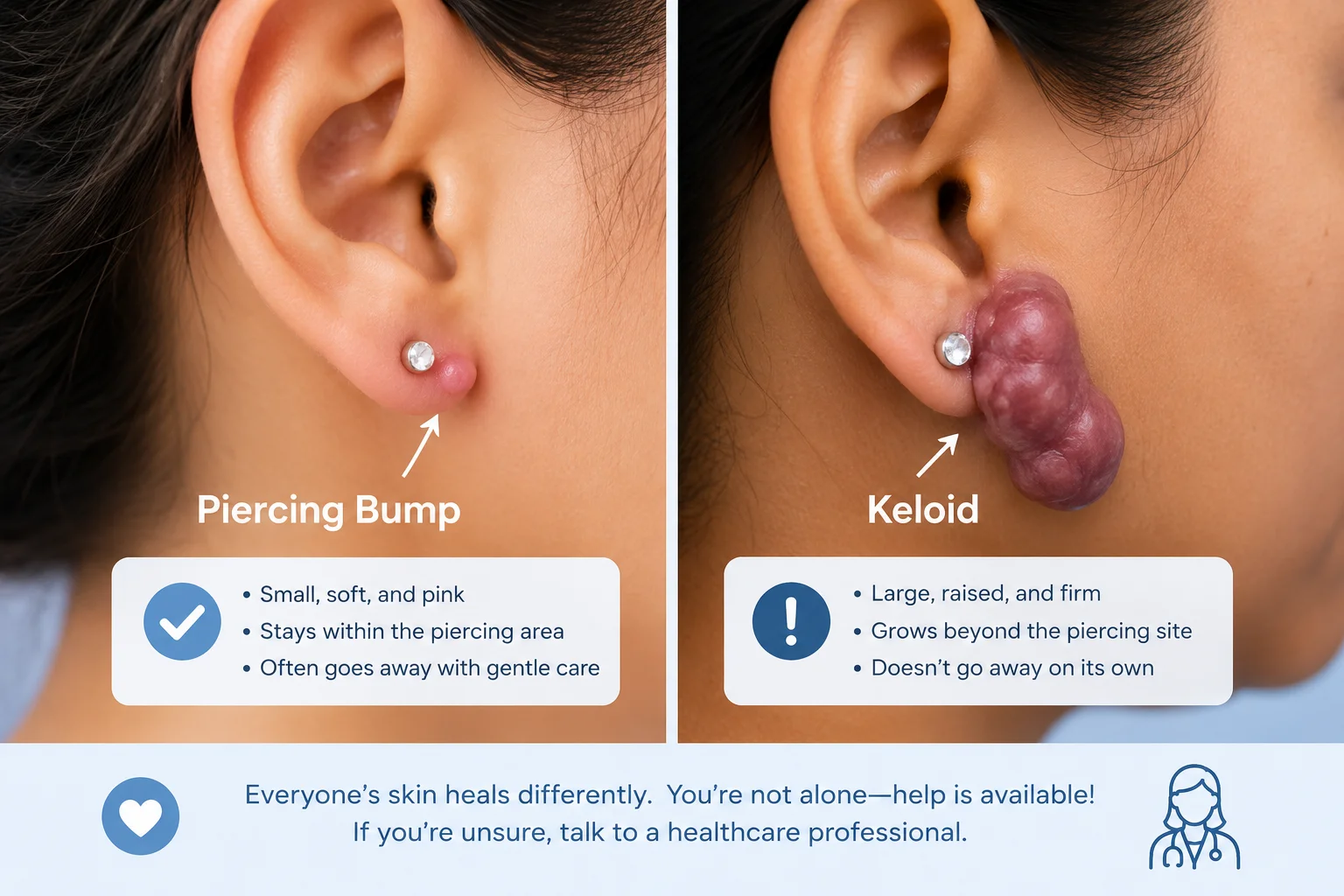
A piercing bump is a small, raised area that appears right at your piercing site. This is your body’s natural response to the trauma of getting pierced. Think of it like a short-lived swelling that happens after any minor skin injury. These bumps are usually soft to the touch. They might be pink or red and can feel a bit tender. Unlike other scars, a piercing bump stays within the original wound area. It is generally a harmless part of healing. This type of bump is not permanent and will not spread to the surrounding skin .
What is a Keloid? (The Overachieving Scar)
A keloid is a completely different kind of scar tissue. It happens when the body overreacts during the healing process. It produces too much collagen, which is a protein that helps repair skin. This excess collagen piles up, creating a hard, rubbery growth. A keloid is much more serious than a standard piercing bump. It grows beyond the original piercing site. It can also continue to grow over time, sometimes becoming quite large. Keloids can be itchy, painful, or cause a burning sensation. They do not disappear on their own without treatment .
Piercing Bump vs Keloid: The Ultimate Comparison Table
Use this quick reference chart to spot the difference between a piercing bump vs keloid. It highlights the key areas of comparison for easy understanding.
| Feature | Piercing Bump (Hypertrophic Scar) | Keloid |
|---|---|---|
| Growth Area | Confined to the piercing hole itself. | Grows beyond the piercing site. |
| Appearance | Pink or red, often soft and flat. | Darker red, purple, or brown, firm, and rubbery. |
| Timing | Appears soon after piercing, often within weeks. | Develops slowly, appearing months after the injury. |
| Duration | It is temporary and fades on its own. | It is permanent and will not fade without treatment. |
| Size | Stays small and does not grow bigger. | Can grow larger over time. |
| Symptoms | Tender to the touch. | Itchy, painful, or causes a burning feeling. |
| Common Causes | Normal healing response, irritation, or pressure. | Excessive collagen production; often genetic. |
Timing: When Does the Bump Appear?
Timing is a very important clue. Piercing bumps usually show up within the first few weeks. Your body is simply reacting to the fresh injury. The bump should start to shrink each week. It often becomes unnoticeable in about six weeks .
In contrast, keloids are slow to form. They can take three to twelve months to appear after the initial piercing. At first, it might look like a small, raised scar. However, its growth continues over time. A keloid might grow slowly for months or even years. This late appearance is a major sign of a keloid .
Appearance and Texture: Feeling the Difference
You can often tell the difference by touch and sight. A piercing bump typically matches your skin color. Or, it is a light pink or reddish shade. Its texture is usually soft or slightly firm. It often looks like a small, pimple-like bump or a bit of trapped fluid. The surface is usually smooth and stays within the piercing.
A keloid has a much different look and feel. It is often darker than the surrounding skin. It can appear shiny and smooth. When you touch a keloid, it feels hard and rubbery. Unlike a bump, a keloid extends beyond the jewelry. It creates a raised scar that sits on top of the skin’s surface .
Causes: Why Do Piercing Bumps and Keloids Form?
Scars form when cells gather to repair damaged skin. The new tissue creates a patch that looks different. The main difference lies in the body’s reaction. Piercing bumps are a normal part of healing. They come from inflammation and tissue repair. This can be worsened by irritation from jewelry. Sleeping on the piercing can also cause it. Even accidentally snagging it on clothing can lead to a bump.
Keloids, on the other hand, are a sign of an overactive healing system. Cells called fibroblasts produce too much collagen. This leads to an overgrowth of tissue. Genetics play a large role here. People with a family history of keloids are at higher risk. Skin type also matters. Keloids are more common in people with darker skin tones .
Who is at Risk for Getting a Keloid?
Not everyone gets keloids. You are more likely to develop one if certain factors apply to you. The biggest factor is family history. If a close blood relative has keloids, your risk increases. This is a genetic trait.
Certain skin tones also have a higher incidence. Keloids are more common in people of African, Asian, or Hispanic descent. This is not a rule, but a recognized statistical trend . If you have a history of keloids from other injuries, you should be cautious. A piercing might trigger another one. Knowing your risk is important before you get the piercing.
Are Some Piercing Sites Riskier Than Others?
Yes, absolutely. The location of your piercing affects the risk. Some areas are more prone to developing these bumps. Earlobe and cartilage piercings are high-risk areas. They are vulnerable to irritation and take longer to heal. This extended healing time increases the chance of scar formation. Other common problem zones include the chest, shoulders, and upper back. If you have a history of keloids, you might want to avoid these areas. It is best to consider lower-risk options if you are prone to scarring .
Can a Piercing Bump Turn Into a Keloid?
This is a common question. The answer is a bit complex. A standard piercing bump does not “turn into” a keloid. They are two completely different biological processes. However, if you are genetically prone to keloids, the initial irritation could be the start of one.
What begins as simple scar tissue may gradually develop into a keloid. This is especially true if the irritation continues. Most normal piercing bumps heal with proper care. However, if the bump persists and starts to grow outward, it could be a keloid. If the lump lasts longer than six weeks, it is time to see a professional. Early evaluation helps identify a keloid early .
Treating a Piercing Bump at Home
Good news for piercing bumps: they often go away on their own. The best remedy is patience and proper aftercare. The main goal is to reduce irritation. Clean the piercing with a sterile saline solution. This is a saltwater mixture you can buy at a store. Do it once or twice daily. Always wash your hands before touching the area.
Leave the piercing alone as much as possible. Avoid moving or twisting the jewelry. If you sleep on the side of the piercing, try to stop. You might also consider a warm compress. Soak a clean cloth in warm water and hold it against the bump. This can help reduce swelling. In some cases, changing to hypoallergenic jewelry helps. This is especially true if you suspect a metal allergy .
Professional Treatments for Piercing Bumps
If a home remedy does not work, a doctor can help. A persistent bump might need more attention. If it is infected, you may need prescription ointment. A board-certified dermatologist is the best person to see. They can prescribe a topical antibiotic. This fights off bacteria causing the bump.
They might also recommend a scar gel. These are available over the counter. Look for one with silicone as an ingredient. It can help flatten raised tissue. If the bump is large, they might suggest a corticosteroid injection. This reduces inflammation. It helps the bump shrink. Professional help ensures you are treating the correct issue .
Medical Solutions for Keloid Removal
Treating a keloid is more involved. They do not go away without intervention. The treatment depends on the size and location of the scar. For smaller keloids, doctors might recommend silicone gel sheets. These are placed over the scar to flatten it. Another common option is steroid injections. These are corticosteroids injected into the scar. They help break down excess collagen. These injections are usually done in a series .
Large keloids might require surgery. However, there is a high risk they will grow back. Surgery is often combined with other treatments. This includes pressure therapy or radiation. Laser treatments are also an option. They can flatten the scar and reduce redness. Cryotherapy freezes the keloid from the inside. This helps to reduce its hardness and size .
When Should You See a Doctor?
You should always keep an eye on your piercing. See a doctor right away if the area becomes very red. This is especially true if the redness spreads. Pain, swelling, and warmth are signs of infection. The same goes for crusting or discharge. If the bump starts to grow or changes shape, seek advice. A painless bump lasting more than six weeks needs a checkup. It might be a keloid.
Do not try to pop or drain the bump yourself. This can make the infection worse. It can also lead to more scarring. Early diagnosis helps prevent complications. A dermatologist can tell you if you have a keloid. They can start a treatment plan to manage it. Acting fast is the best way to protect your skin .
Preventing Piercing Bumps and Keloids
Prevention is easier than treatment. Start by choosing a reputable piercer. They use sterile equipment and provide clear aftercare. Good jewelry materials are vital. Use surgical steel, titanium, or 14-karat gold. Avoid nickel, as it is a common irritant. Clean the piercing with sterile saline spray. Do not use harsh chemicals like alcohol or hydrogen peroxide.
They can dry out the skin and cause irritation. Do not touch the piercing with dirty hands. Also, do not rotate the jewelry during cleaning. This disrupts the healing process. If you have a family history of keloids, be very careful. Consider avoiding piercings in high-risk areas. Talk to a dermatologist before getting the piercing .
Conclusion
Dealing with a piercing lump can be a worrying experience. However, knowing the difference between a piercing bump vs keloid gives you power. A piercing bump is a common, temporary visitor. It goes away with good aftercare and patience. A keloid is a stubborn, overgrown scar that needs professional help. If you are unsure, always visit a dermatologist.
Your skin is worth the care. With the right knowledge, you can handle any piercing bump or keloid issue. This ensures your piercing journey stays positive.
Frequently Asked Questions
1. Can a piercing bump go away on its own?
Yes, absolutely. A standard piercing bump is usually temporary. It is a normal part of the healing process. With good aftercare, it will start to shrink within weeks. It often disappears completely after a few months. Patience and not irritating the area are the best treatments .
2. How can I tell if I have a keloid or a normal piercing bump?
Look at the size and growth. A piercing bump stays near the piercing hole. A keloid grows beyond it. Also, check the timing. Bumps show up early and shrink. Keloids appear months later and grow. Keloids are also firmer and can be itchy or painful. A dermatologist can help confirm the diagnosis .
3. What is the best home remedy for a piercing bump?
The best remedy is sterile saline solution. Clean the piercing twice daily. Also, use a warm compress to help with swelling. Avoid touching or playing with the jewelry. Keep hair and makeup away from the area. This helps reduce irritation and allows the bump to heal naturally .
4. Can I pop a piercing bump like a pimple?
No, never pop a piercing bump. It is not a pimple. Popping it can push bacteria deeper into the wound. This can cause a serious infection. It can also lead to worse scarring. Let it heal naturally or seek professional medical advice .
5. When should I see a doctor about my piercing bump?
You should see a doctor if the bump is painful. If it grows larger or changes color, get it checked. Also, seek help if it produces pus or blood. If it lasts longer than six weeks, it is time for a professional opinion. These could be signs of infection or a keloid