
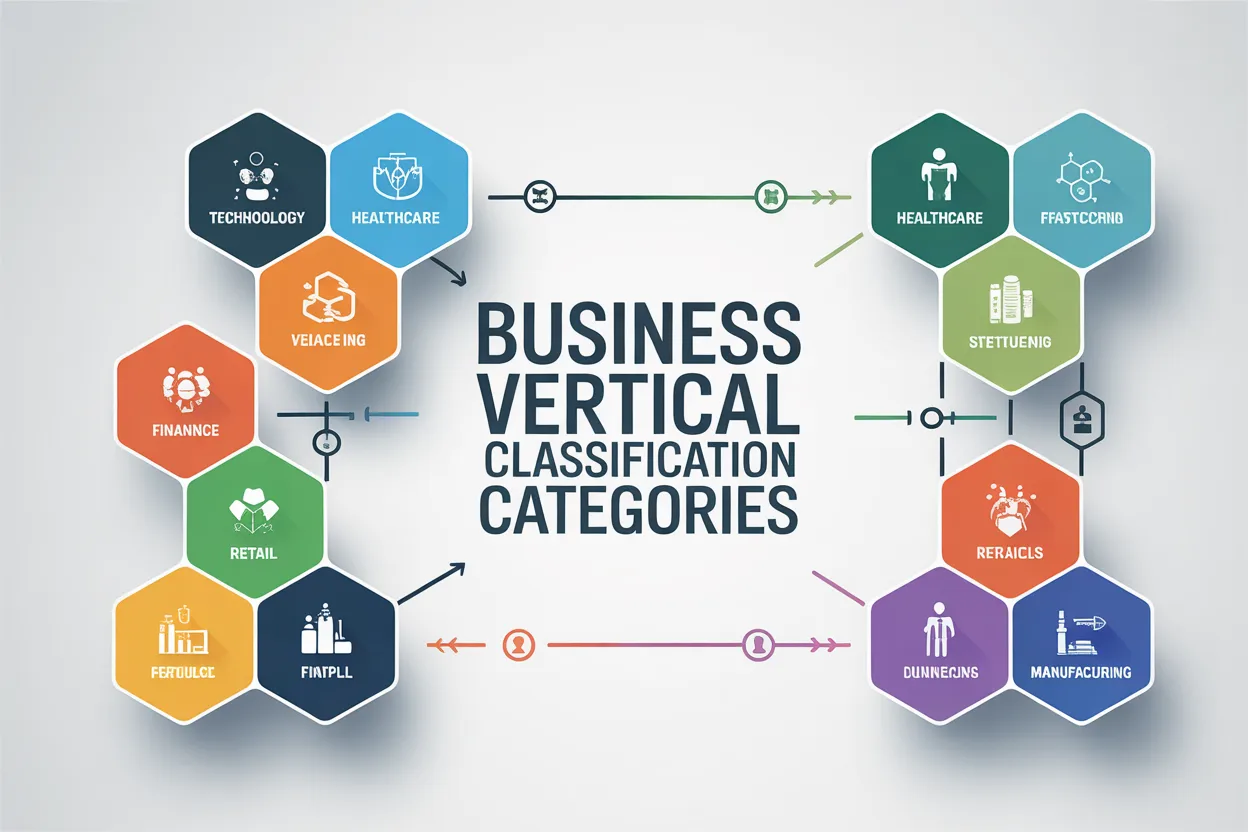
Business Vertical Classification Categories
Unlocking Success with Business Vertical Classification Categories
Finding your place in the vast world of commerce can feel like searching for a needle in a haystack. However, understanding business vertical classification categories is the secret map that leads straight to success. When you know exactly where your company fits, you can stop guessing and start growing. These categories help you group similar businesses together based on what they do and who they serve. It is not just about labels; it is about finding your tribe and your competitive edge in a crowded room.
Imagine walking into a massive library without any signs. You would spend hours looking for one specific book. Business categories act like those signs, guiding you to the right shelf. By mastering business vertical classification categories, you gain the power to talk to your customers in a way that truly resonates. You begin to see patterns in how money flows and how problems are solved within specific niches. This clarity is what separates a struggling startup from a market leader that knows its worth and its path forward.
Why Every Leader Needs to Know Their Vertical
If you want to win, you have to know the rules of the game you are playing. Every industry has its own rhythm, and business vertical classification categories define those beats. A vertical market focuses on a specific niche, like healthcare or construction, rather than trying to sell to everyone. This focus allows you to become an expert very quickly. Instead of being a “jack of all trades,” you become the go-to specialist that people trust with their most important problems and biggest investments.
When leaders ignore business vertical classification categories, they often waste precious resources on broad marketing that misses the mark. You wouldn’t use a megaphone at a library, and you shouldn’t use a general strategy for a specialized field. By narrowing your sights, you can tailor your products to meet the exact needs of a specific group. This builds deep trust and loyalty, which are the two most valuable currencies in the modern economy. It makes your brand feel personal, relevant, and incredibly powerful to your target audience.
Exploring the Major Types of Industry Verticals
The world of commerce is divided into several big buckets, and each one has its own unique flavor. Some of the most common business vertical classification categories include finance, technology, healthcare, and retail. Each of these areas requires a different set of skills and a different way of thinking. For example, a tech company moves fast and breaks things, while a healthcare company must be slow, careful, and highly regulated. Understanding these differences helps you set the right pace for your own business journey.
Within these broad business vertical classification categories, you will find smaller niches that offer even more specific opportunities. A “fintech” company lives at the intersection of finance and technology, taking the best parts of both worlds. By looking at these categories, you can see where the biggest challenges are and where you can offer the best solutions. It is like having a bird’s-eye view of the entire global economy. This perspective helps you spot gaps in the market that others might overlook while they are stuck in the weeds.
Detailed Breakdown of Classification Systems
| Category Name | Core Focus | Target Audience | Key Example |
| Healthcare Vertical | Medical services and wellness | Patients and doctors | Hospitals and Clinics |
| Financial Vertical | Money management and banking | Investors and savers | Credit Unions |
| Education Vertical | Learning and skill building | Students and teachers | Online Universities |
| Retail Vertical | Selling goods directly | General consumers | Grocery Stores |
| SaaS Vertical | Software as a service | Business owners | Cloud Storage Apps |
How to Choose the Right Category for Your Brand
Picking your spot among the various business vertical classification categories is one of the most important choices you will ever make. You need to look at what you are good at and what the world actually needs. If you love building gadgets, the technology vertical is likely your home. If you enjoy helping people feel better, healthcare or wellness might be your best bet. The goal is to find a place where your passion meets a real problem that people are willing to pay to solve.
Don’t be afraid to pivot if your first choice doesn’t feel right. Many of the most successful companies in the world started in one of the business vertical classification categories and moved to another as they grew. The key is to stay flexible and keep your eyes open. Listen to your customers and watch where they are spending their time and money. If you find a niche that is underserved, jump in with both feet. Your category defines your playground, so make sure it is a place where you can truly shine and lead.
The Power of Niche Specialization in Modern Markets
In the old days, being a big company that sold everything was the goal. Today, the most successful brands are those that dominate specific business vertical classification categories. When you specialize, you can charge more for your services because you provide more value. People are happy to pay a premium for someone who truly understands their specific situation. It’s the difference between buying a generic suit and getting one custom-made just for you. The custom fit always feels better and lasts much longer.
By focusing on narrow business vertical classification categories, you also reduce your competition. Instead of fighting against every company in the world, you only have to be better than a few others in your specific niche. This makes it much easier to stand out and become a household name within that community. You can create content, products, and experiences that feel like they were made specifically for your target audience. This creates a strong emotional bond that keeps customers coming back for years to come.
Understanding the Difference Between Horizontal and Vertical
It is helpful to compare business vertical classification categories to horizontal markets to see why they matter. A horizontal market sells a product that almost anyone can use, like office chairs or paper clips. A vertical market sells something very specific, like software for dentists or specialized tools for underwater welding. Horizontal markets have more potential customers, but vertical markets have less competition and higher loyalty. Both are good, but they require very different strategies to succeed and stay profitable over time.
Think of a horizontal market like a giant ocean and a vertical market like a deep well. In the ocean, you can go anywhere, but you might get lost in the waves. In the well, you know exactly where the water is, and you can go as deep as you want. Most small and medium businesses find much more success by focusing on business vertical classification categories. It allows them to build a “moat” around their business, making it very hard for outsiders to come in and take their customers away.
Emerging Categories in the Digital Age
The world is changing fast, and new business vertical classification categories are popping up every single day. We are seeing the rise of green energy, artificial intelligence, and remote work tools. These categories didn’t even exist a few decades ago, but now they are some of the most profitable areas of the economy. Staying ahead of these trends requires you to keep a close eye on how technology is shifting. If you can spot a new category before it goes mainstream, you can position yourself as a pioneer and a leader.
Entering one of these new business vertical classification categories can be scary because there is no roadmap yet. However, the rewards for being first are often massive. You get to set the standards and define what success looks like in that space. It takes courage and a bit of a gambler’s spirit, but it is also incredibly exciting. As the digital world continues to expand, the number of specialized categories will only grow, providing endless opportunities for those who are brave enough to explore the unknown.
Analyzing Consumer Behavior Within Specific Verticals
Every person acts differently depending on what they are buying. When someone is looking for a new car, they behave differently than when they are buying a loaf of bread. This is why studying business vertical classification categories is so useful for understanding your customers. By looking at how people shop within your specific category, you can predict what they will do next. You can see what triggers their interest and what makes them click the “buy” button. This knowledge is like having a superpower in the world of sales.
Inside specific business vertical classification categories, you will find that certain language and imagery work better than others. In the luxury vertical, people want to feel exclusive and special. In the discount vertical, they want to feel smart and frugal. By matching your message to the expectations of your category, you make it much easier for people to say “yes” to you. It creates a sense of harmony between what you are selling and what the customer is actually looking for in that moment.
Common Challenges When Navigating Business Categories
No path to success is without its bumps, and working within business vertical classification categories has its own set of hurdles. One of the biggest challenges is becoming too narrow. If your niche is too small, you might run out of customers to serve. Another risk is that your category might become obsolete if technology changes too quickly. Just think about the companies that specialized in making film for cameras. When digital photography took over, their category almost vanished overnight, leaving them struggling to find a new home.
To avoid these traps, you must always be learning and growing within your business vertical classification categories. Keep an eye on the horizon and be ready to adapt when things change. It is also a good idea to have a “Plan B” in case your primary niche starts to shrink. Diversifying your skills within your category can help you stay relevant even when the market shifts. The most successful businesses are those that are rooted in their niche but have branches that can reach into other areas when necessary for survival.
The Future of Market Classification and Strategy
As we look toward the future, the way we define business vertical classification categories will likely become even more precise. Big data and smart computers are helping us see connections that we never noticed before. We might see categories that are based on personality types or very specific lifestyle choices. This will allow businesses to be even more targeted in how they help people. The more we know about these categories, the better we can serve our communities and build companies that actually make a difference in people’s lives.
In the coming years, the lines between different business vertical classification categories might start to blur even more. We see this already with “smart” homes and wearable tech that blends health with fashion. This cross-pollination creates exciting new opportunities for innovation. By staying curious and open-minded, you can navigate these changes with confidence. The future belongs to those who understand the structure of the market but aren’t afraid to break the rules to create something truly new and wonderful for the world to enjoy.
Frequently Asked Questions
What exactly is a business vertical?
A business vertical is a specific niche or industry where companies provide products and services to a targeted group of customers. Unlike horizontal markets that serve many industries, verticals focus on one area like real estate or legal services.
How many business vertical classification categories exist?
There are hundreds of categories! While there are a few major ones like retail and finance, these are broken down into thousands of sub-categories. As technology evolves, new ones are created every year.
Why should I care about these categories?
Knowing your category helps you focus your energy. It allows you to understand your competition, speak your customer’s language, and build a brand that stands out. It makes your marketing much more effective and saves you money.
Can a business belong to more than one category?
Yes, some businesses are “hybrid.” For example, a company that makes medical software belongs to both the Healthcare and the Technology business vertical classification categories. This can be a great way to find a unique spot in the market.
How do I find my business vertical?
Look at who uses your product and what problem it solves. If your product is only for a specific group of people (like mountain climbers or heart surgeons), that is your vertical. If anyone can use it, you might be in a horizontal market.
Is it better to be in a big vertical or a small one?
Both have pros and cons. Big verticals have more customers but more competition. Small verticals have fewer customers but it is much easier to become the leader in that space. Most experts suggest starting small and growing.
Conclusion: Taking Your Next Steps Toward Dominance
Understanding business vertical classification categories is more than just a mental exercise. It is a practical tool that can help you build a stronger, more profitable, and more meaningful business. By identifying where you fit, you gain the clarity needed to make smart decisions and build a brand that lasts. You don’t have to be everything to everyone. In fact, you will likely find much more success by being everything to a specific group of people who truly need what you have to offer.
Now that you have a better grasp of how these categories work, it is time to take action. Look at your current business or your next big idea and see where it fits. Are you in the right spot? Is there a sub-niche that is calling your name? Use this knowledge to sharpen your focus and dominate your space. The world is waiting for your unique contribution, and by mastering your vertical, you are one step closer to making your mark and achieving the success you deserve.
You may also like to read: Fitness Items for Swinging Crossword Clue | Expert Guide 2026
About the Author
